
Domestic hot water heat exchanger and its operation: "How to properly protect the heart of your building's hot water supply?"
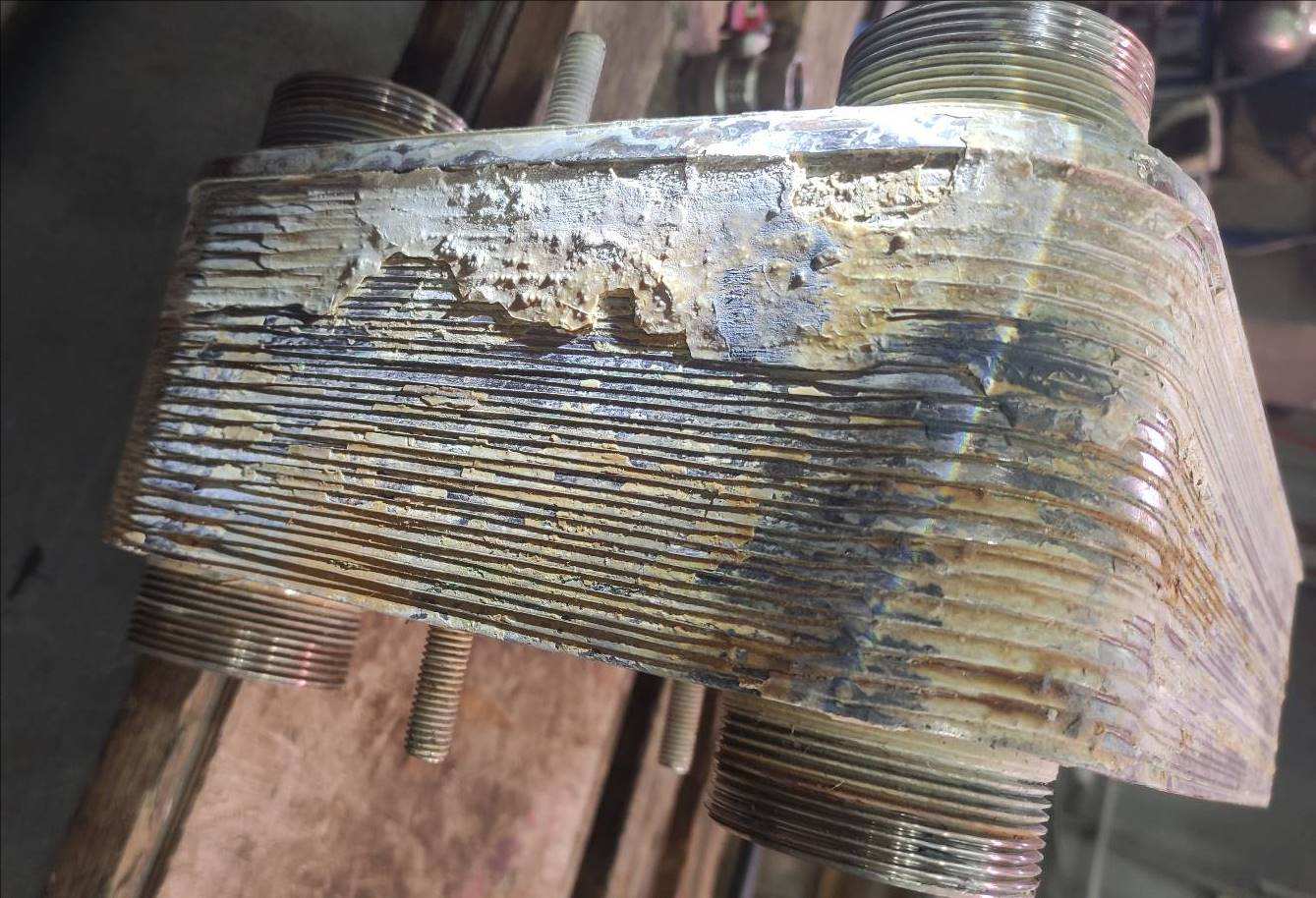
But what if that "heartbeat" starts to fail? Nothing is more annoying than a cold shower or the sudden loss of hot water at the most inconvenient moment. If the domestic hot water heat exchanger in your building fails more often than it should, this short guide will help you understand why this happens and what you can do to ensure a continuous hot water supply.
The domestic hot water heat exchanger is one of the most heavily loaded components in the whole chain of building systems. It works constantly with the supplied water and at a high temperature, which is ideal for scale formation and corrosion. For these reasons, domestic hot water heat exchangers require more maintenance and protective measures.
Main causes of heat exchanger failure
As a rule, quality domestic hot water heat exchangers are durable units, and many of their failures can be avoided. Problems most often arise not from a manufacturing defect but from water quality and a lack of maintenance. For a heat exchanger, quality water is like an elixir of life, but if it is "contaminated", that "elixir" becomes poison.
1. Water quality: the silent enemy
The service life of a heat exchanger is directly determined by the water entering it. If the water is too hard, corrosive or chemically aggressive, even a quality unit will not survive. The most common problems are scale deposits, the effects of chlorides, low pH or dissolved CO₂.
- Scaling: "calcified arteries". This is probably the most common problem with domestic hot water heat exchangers. Hot water production particularly encourages the formation of scale (calcium and magnesium deposits), especially if your water is hard. These deposits, like cholesterol plaque in your water pipes, gradually narrow the internal channels of the heat exchanger. They act as an insulator that prevents heat from efficiently reaching the water. The result? The heat exchanger works harder, energy bills rise, and the quantity and temperature of the hot water fall until the system finally clogs up and your "heartbeat" becomes "weak".
- Corrosion and chlorides: "a hidden blood clot". Hot water increases the risk of metal corrosion. Aggressive water, especially with a high chloride content, can damage the metal of the heat exchanger. Chlorides are like an invisible "blood clot" that can cause small, deep pits in stainless steel plates even when they look clean. Heat exchanger analyses carried out together with manufacturers show that a common cause of leaks is copper corrosion at the brazed joints, caused by a pH that is too low and/or a high CO₂ concentration in the water that does not meet the manufacturer's instructions. Such damage causes leaks that are sometimes hard to detect until they reach a critical point.
- Sediment and impurities: "clogged capillaries". Rust, sand, silt and other mechanical impurities from the water supply system can enter the heat exchanger. They accumulate in the narrow channels, reduce water flow and promote scaling and corrosion. It is like sand clogging the finest capillaries, stopping circulation and disturbing the heart rhythm.
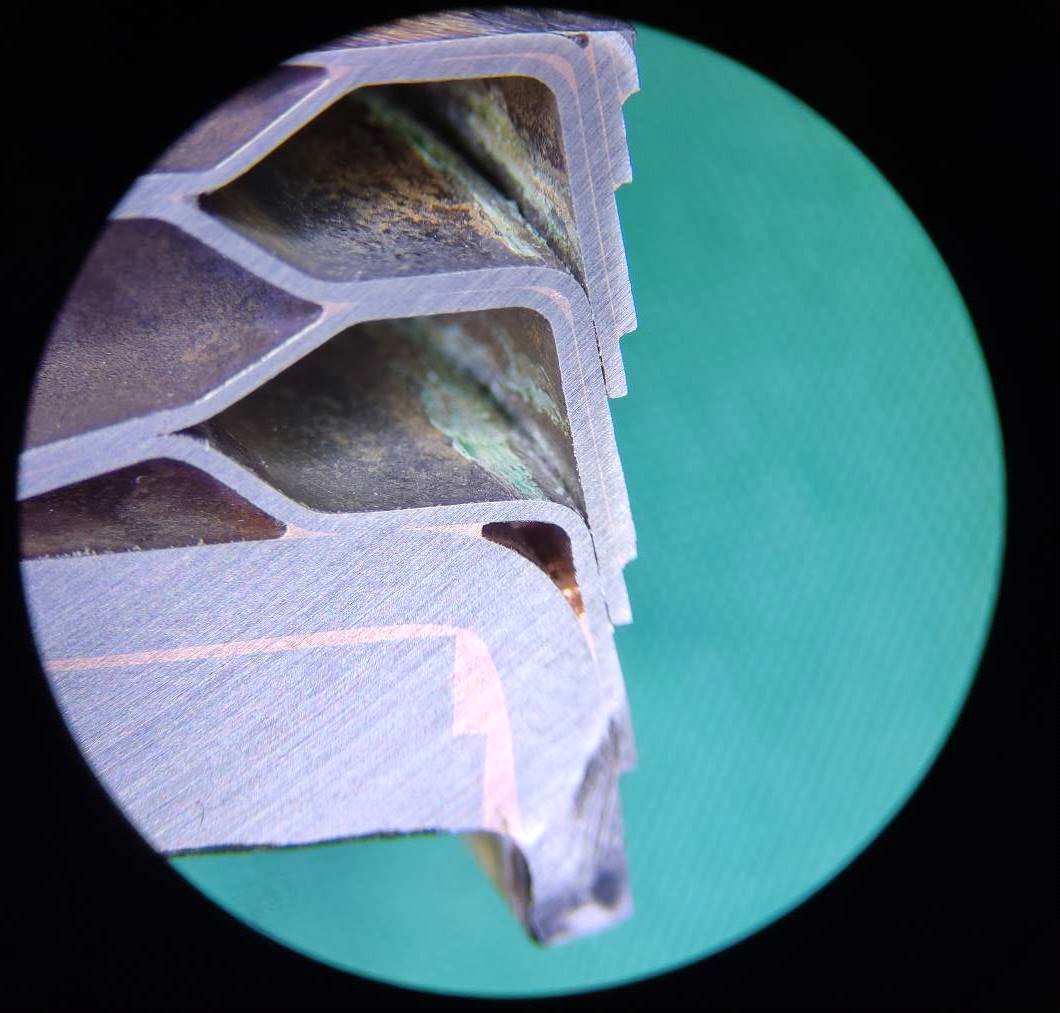
Photo description: "The visible copper corrosion damage is like small but persistent signs of a 'damaging disease' in the 'tissues' of your heat exchanger. Such damage weakens the unit's 'immunity' and can lead to unexpected leaks."
2. Operation and system "stress":
- Excessive temperature: "fever". Although a domestic hot water heat exchanger is designed to heat water, a primary circuit temperature that is too high (often above 100 °C) can cause faster scale formation and even plate deformation. It is like a permanent fever: over time it weakens the heart and forces it to work overtime.
- Sudden changes in temperature or pressure: "heart attacks". Rapid system start-up, or sudden opening or closing of taps, can cause water hammer, which is dangerous and puts mechanical stress on the heat exchanger. These are like sudden, uncontrolled "heart attacks" that can damage the heat exchanger.
- Inadequate flow or stagnant water: "a pulse that is too weak". Insufficient water flow through the heat exchanger reduces turbulence, which encourages the build-up of deposits. In addition, long periods of stagnant water inside the heat exchanger, especially with aggressive water composition, can significantly accelerate corrosion. It is like a pulse that is too weak: the heart does not pump the "blood" hard enough, causing stagnation and "circulatory disorders".
- Oversized heat exchanger capacity: "too much reserve". Sometimes, to ensure sufficient water at peak times, oversized heat exchangers are installed (the Amegata.lt record: a failed heat exchanger that was 2.1 times more powerful than needed!). Although in theory this sounds good, in most cases (outside peak times) it means that the water flows through the heat exchanger too slowly, or its flow is too low to ensure a proper turbulent regime. Slow flow encourages deposits (scale, dirt) to accumulate on the plates, because there is not enough "rinsing" effect. In addition, longer periods of stagnant water inside the heat exchanger, especially when water quality is not ideal (low pH, chlorides), can significantly accelerate corrosion, particularly at the brazed joints. It is like a heart working in a balanced mode, where the "blood" in it stagnates and gradually harms the internal organs.
3. Lack of maintenance: "forgotten prevention":
- Filters not cleaned: if the filters in the hot water circuit clog up, impurities go straight to the heat exchanger, increasing the risk of clogging and corrosion. It is like ignoring clogged kidneys: toxins accumulate in the body and harm the heart.
- Infrequent or improper flushing: even with good filters, the build-up of scale and deposits is inevitable. If the heat exchanger is not flushed regularly with special products, its efficiency will keep falling.
- Ignored warnings: low hot water pressure, cooler water than usual or increased energy consumption are signals that the heat exchanger is "ill". If these "symptoms" are ignored, small problems turn into big and costly breakdowns.
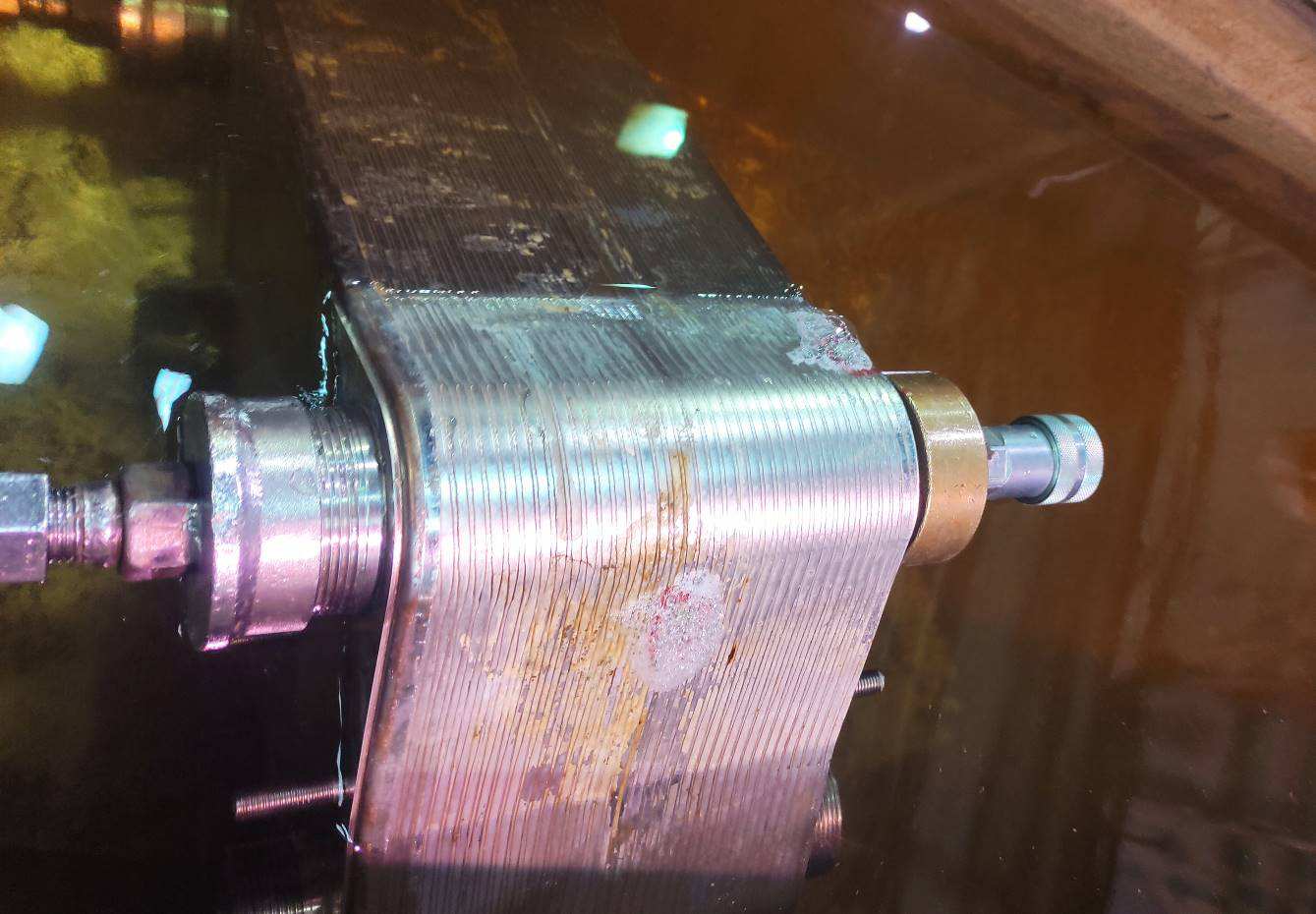
How to protect a domestic hot water heat exchanger?
Monitoring and maintaining the condition of the heat exchanger is the only way to ensure long-term operation and a continuous hot water supply. Your efforts can extend its service life and save a lot of money.
1. Water quality: "blood tests and treatment":
The service life of a heat exchanger is directly determined by the water entering it. Recommended water parameters to monitor:
- pH: 7.0 – 8.5
- Conductivity: < 500 µS/cm
- Chlorides: < 100 mg/l
- Hardness: < 8 dH (or 1.43 mmol/l, 143 mg/l CaCO3)
- Water treatment: if the water parameters do not meet the norms, it is important to take action.
✅ Water softening: use ion-exchange resin systems to reduce water hardness and prevent scale formation.
✅ Reverse osmosis (RO) systems: if the water contains a high level of chlorides that poses a corrosion risk, an RO system can be an effective solution, removing most of the dissolved salts.
✅ Water inhibitors: in certain cases, especially if the system is used only for process water or a circulation circuit, corrosion inhibitors can be used, which create a protective film on the metal surface.
2. Practical solutions: "strengthening the heart":
✅ Protection against scaling and deposits:
- Mechanical filters (<100 µm): install and regularly clean fine filters in both circuits to trap mechanical impurities.
- Sediment separators or magnetic traps: additional measures that help collect deposits before they enter the heat exchanger.
✅ Thermal shock and pressure control:
- Slow heating/cooling start-up: train staff to raise and lower the system temperature gradually, to avoid sudden temperature changes that can damage the heat exchanger.
- Pressure control valves: make sure that pressure control and balancing valves are installed in the system and properly adjusted, to protect against water hammer.
✅ Recirculation maintenance:
- Optimising recirculation pump operation: make sure the recirculation pump works efficiently and ensures constant water movement in the system, to avoid stagnation and the build-up of deposits.
- Balancing valves: proper balancing of the recirculation system helps ensure that water does not stand still in the pipes, especially at night, reducing the risk of scaling and corrosion.
✅ Choosing a heat exchanger of the right capacity:
- Choose a heat exchanger of the right capacity, one that meets the building's needs not only at peak times but also regularly ensures optimal flow, to avoid stagnant water and the build-up of deposits. It is like optimising the heart's workload so that it is efficient, but neither overloaded nor too slow.
3. Regular maintenance: "preventive visits to the doctor":
✅ Chemical flushing every 1–3 years: this is like a "detox" for your building's heart. The frequency depends on water quality and intensity of use. Entrust this task only to qualified specialists using solutions approved by the manufacturer.
✅ Visual inspection: regularly inspect the heat exchanger for signs of corrosion, moisture or accumulated deposits. "Symptoms" noticed in time can prevent major "illnesses".
✅ Water tests: carry out thorough water tests at least once a year to monitor changes in water quality and take action in time.
✅ Record temperature and pressure changes: monitor these parameters daily. Abnormal changes can be early signs of impending failures.
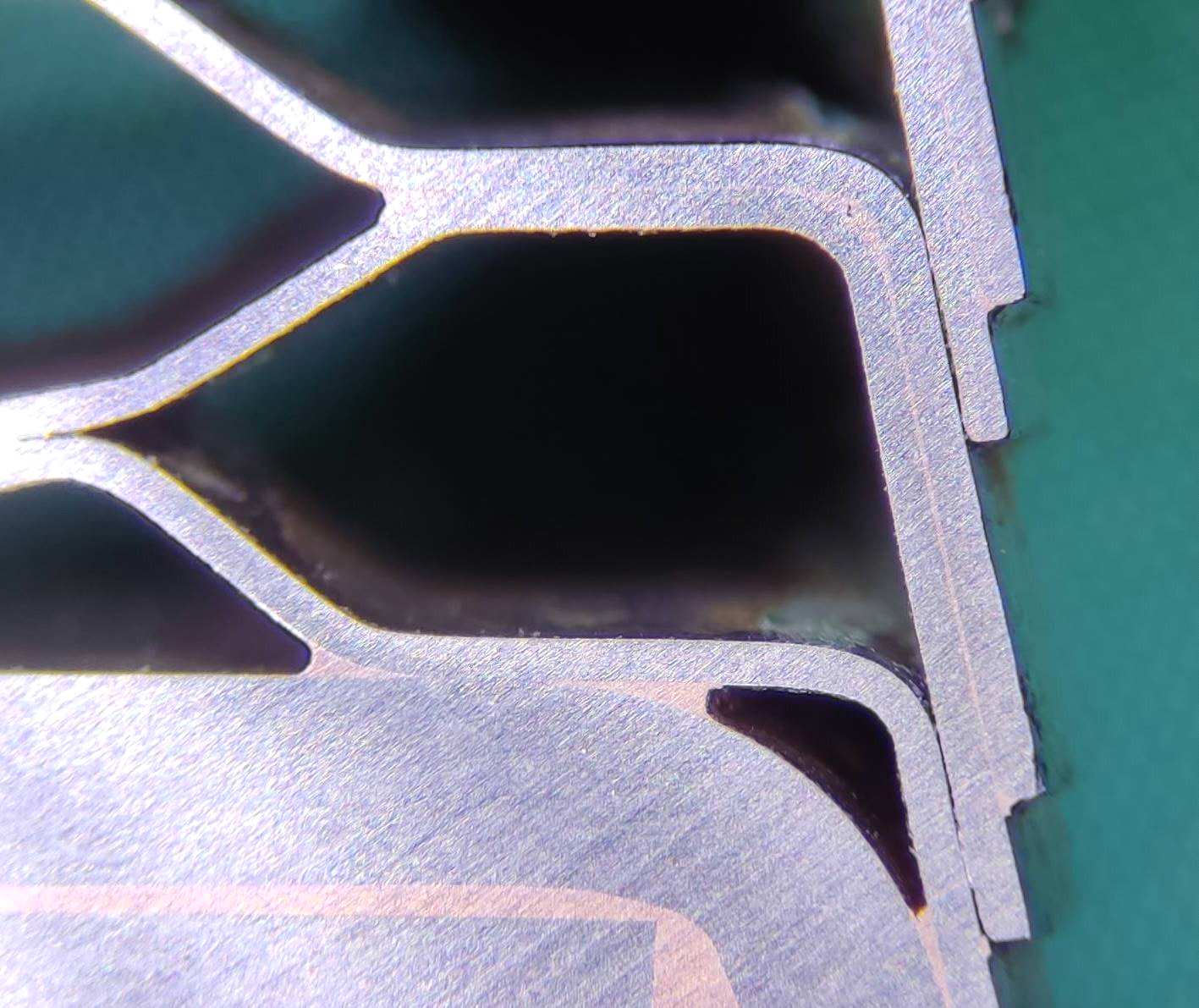
Signs of chronic corrosion: separation between the plates due to loss of copper is critical structural damage to the heat exchanger
Heat exchanger inspection plan:
- ☐ Water quality tests: pH, conductivity, chlorides, hardness. Water tests at least once every 3 years;
- ☐ Water treatment: softening, RO systems or inhibitors;
- ☐ Installation and cleaning of mechanical filters;
- ☐ Prevention of water hammer: pressure and temperature controllers;
- ☐ Maintenance of the recirculation pump and balancing valves;
- ☐ Selecting the right heat exchanger capacity;
- ☐ Chemical flushing every 1–3 years;
- ☐ Visual inspection for corrosion and deposits
Conclusion: your secret to a long life for the domestic hot water heat exchanger
Domestic hot water heat exchanger failures are often the result of improper operation rather than a factory defect. Properly treated water, professional installation and system control, filters and periodic maintenance are the four cornerstones that ensure longevity and peace of mind.
Remember, prevention is always cheaper and less complicated than fixing failures or replacing the whole unit. Take care of your heat exchanger and it will serve you long and reliably, ensuring constant comfort in your building.
Read more about why heat exchangers fail here
Prepared by: Evaldas Lasys. The content is based on data collected by Amegata.lt partners and real analysis of operating cases.
All rights reserved. Publishing or otherwise using this content without the written permission of Amegata.lt is prohibited.

Supplier of building heating substation equipment
This article is based on Amegata.lt's hands-on experience. See it differently or have something to add? Write to us – we're happy to discuss, and if you share new, well-founded information, we will update the article. Updated October 2026.